
Tailwind Marketing

The Client & The Product
Our client, based in the United States, sells DIY-friendly railing and fencing kits. They started off as an Amazon seller, and expanded their sales efforts outside of Amazon.
They had been selling a product called the Guard Rail for decks/porches of American homes.
Industry
E-commerce (Home Improvement)
Type of work
Google Ads & Conversion Optimization

An image of their Guard Rail product, targeted to homeowners who wanted to secure their decks/porches.
Why Google Ads?
They failed to move the product as successfully as they had hoped on Amazon and Wayfair.
This was because:
It was a high ticket purchase. People couldn’t just buy one unit. They had to buy multiple units to cover the area of their deck/porch.
This meant that they would need to inspire more clarity and confidence, if they wanted people to pull out their credit cards for an online purchase.
Our Strategy
We’ve established that a product like a Guard Rail is a considered purchase. Most customers request a quote, then take time to compare with competitors, possibly discuss with their family, and weigh the decision carefully.
Setting Expectations
The Google Ads account had zero data on Guard Rail sales.
We expected a slow start, which would gain pace after the first few sales.
We expected, eventually, a ROAS of 3+ on e-commerce sales at minimum, given that it’s a high-ticket item.
Driving the First Few Sales
We had Clarity installed on their website.
We aimed at starting with a lower budget, and closely observing:
Relevancy of traffic on Google Ads.
Traffic behaviour on the site.
We were prepared to quickly modify/add/remove elements from the pages based on how users were behaving, to drive our first sales in.
Our strategy to drive our first few sales was more website-oriented than Google Ads-oriented.
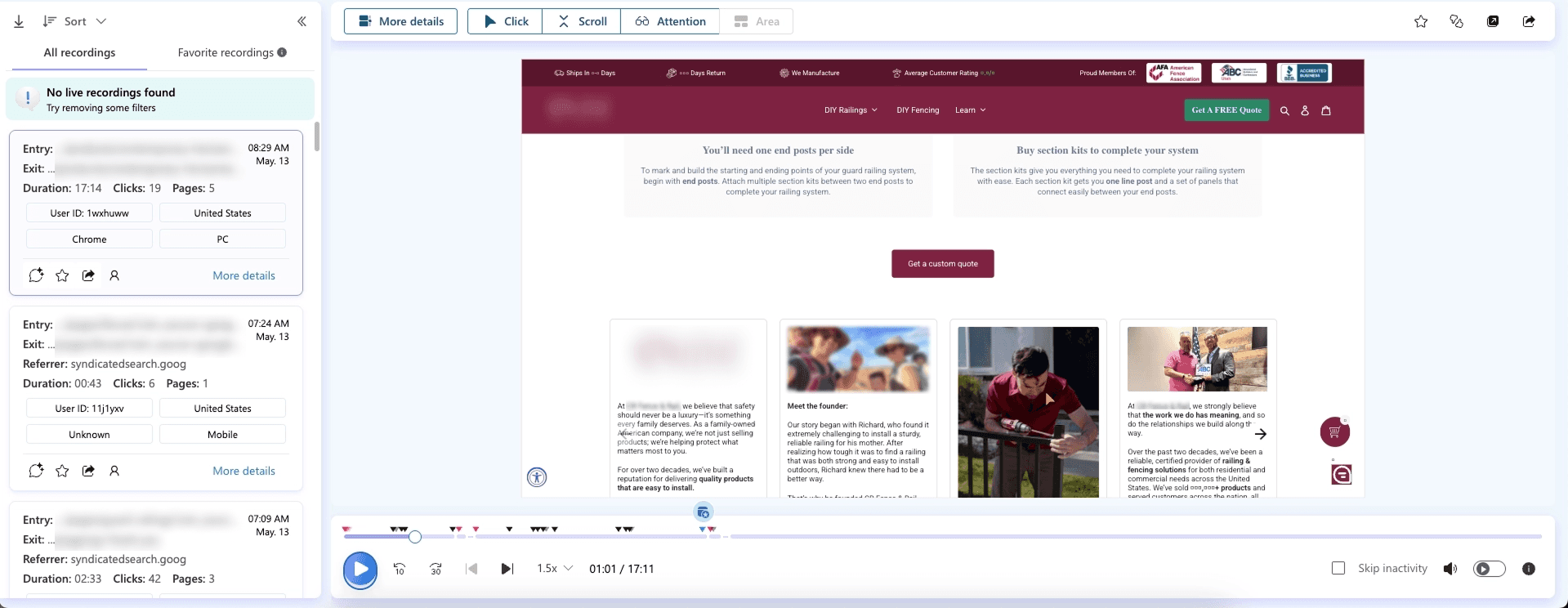
A screen capture from a Clarity audit taking place during the initial days of the campaign.
The Outcome
The First Month (Slow)
The idea here was not to have a positive ROAS in the first month, but to learn from customer behaviour on the website and optimise the website for conversions. As we saw our first few sales come in for Guard Rails, we knew we were on the right track.
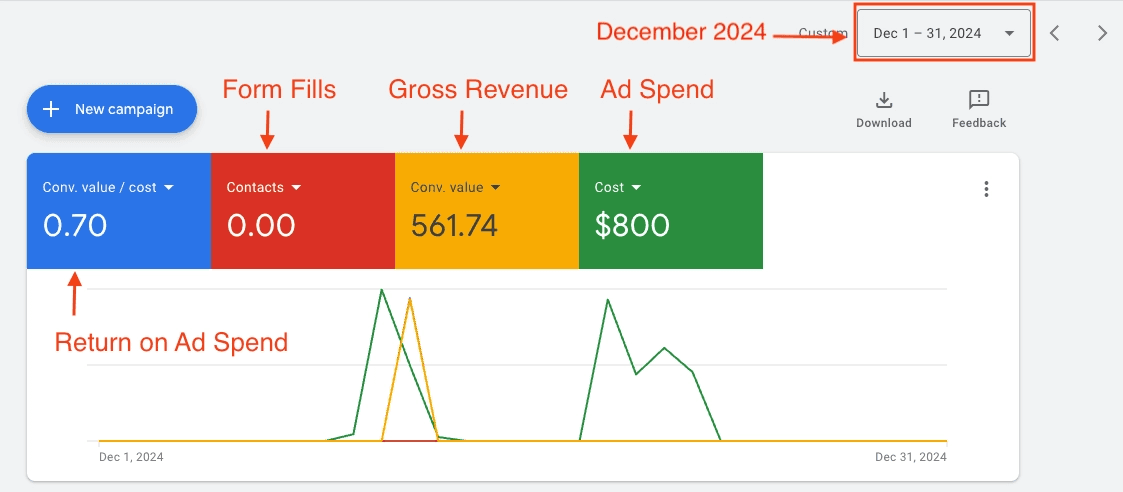
The results were sub-par, as predicted and expected.
Our return on ad spend was 70% of our cost of running ads (0.70)
Ad spend was extremely low (we spent $800 in all 31 days of December). This was done to keep a granular eye on traffic and adjust the website until we found our winning formula.
Our first month did not lead to very good results. We were prepared for this, and were very deliberate with our spending and efforts.
Hitting Profitability
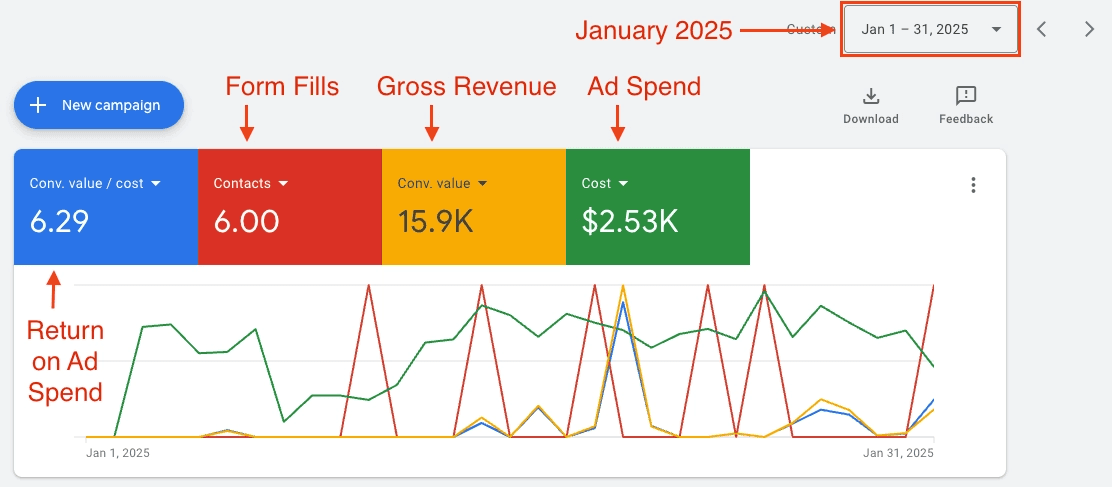
Once we felt confident in the website’s ability to convert, we scaled up ad spend.
We made nearly $16,000 for an ad spend of $2,525.38
The ROI in this month was 629%.
How?
How Did We Do This?
To sell a high-ticket, DIY-installed product, we focused on confidence in three areas:
Confidence in quality/product.
Confidence in ease of installation.
Confidence in support.
Additionally, we designed the website experience around structure and context.
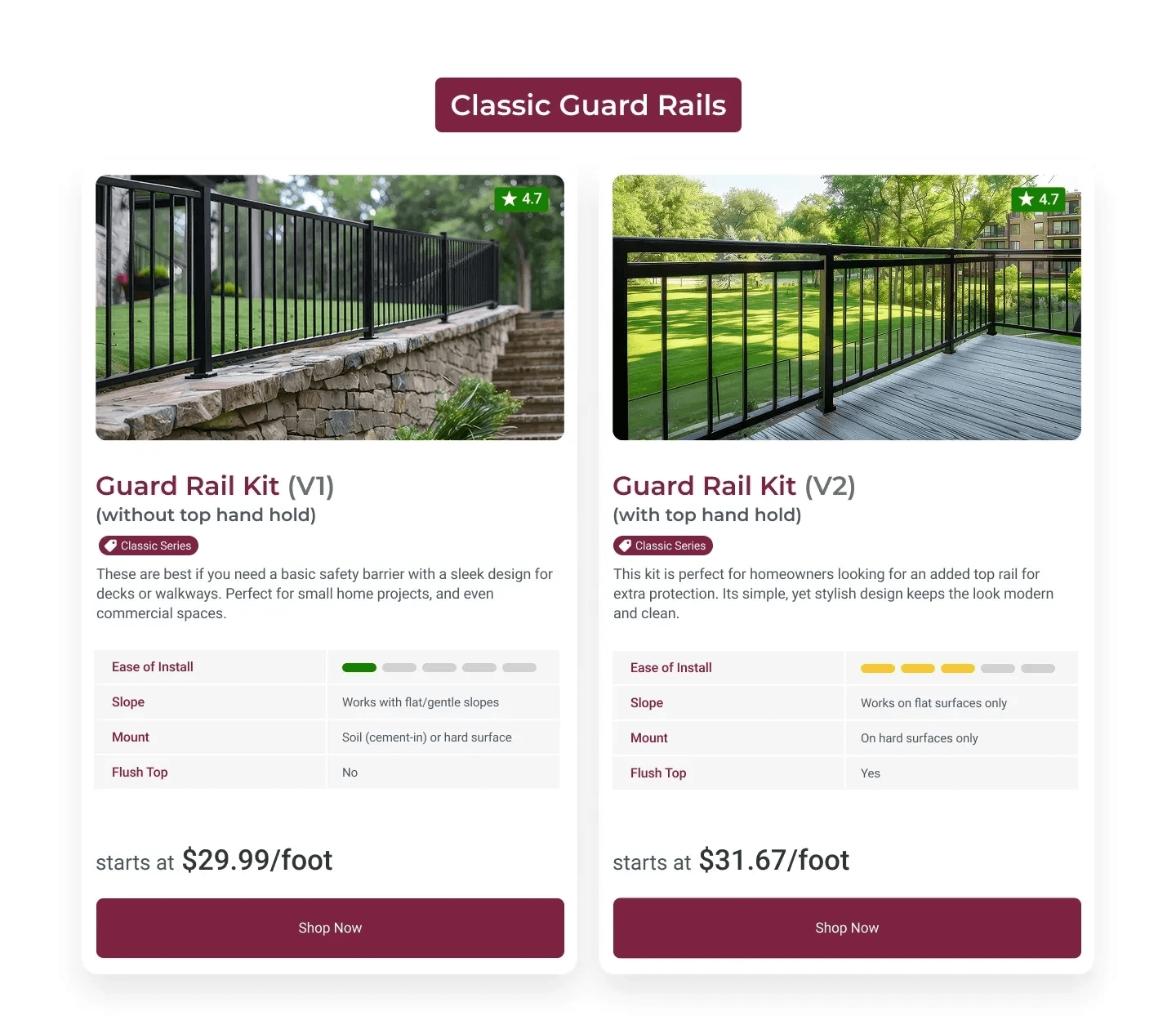
An example of inspiring confidence and setting context; key decision factors — installation difficulty, slope compatibility, mount types — were surfaced before users reached product pages.
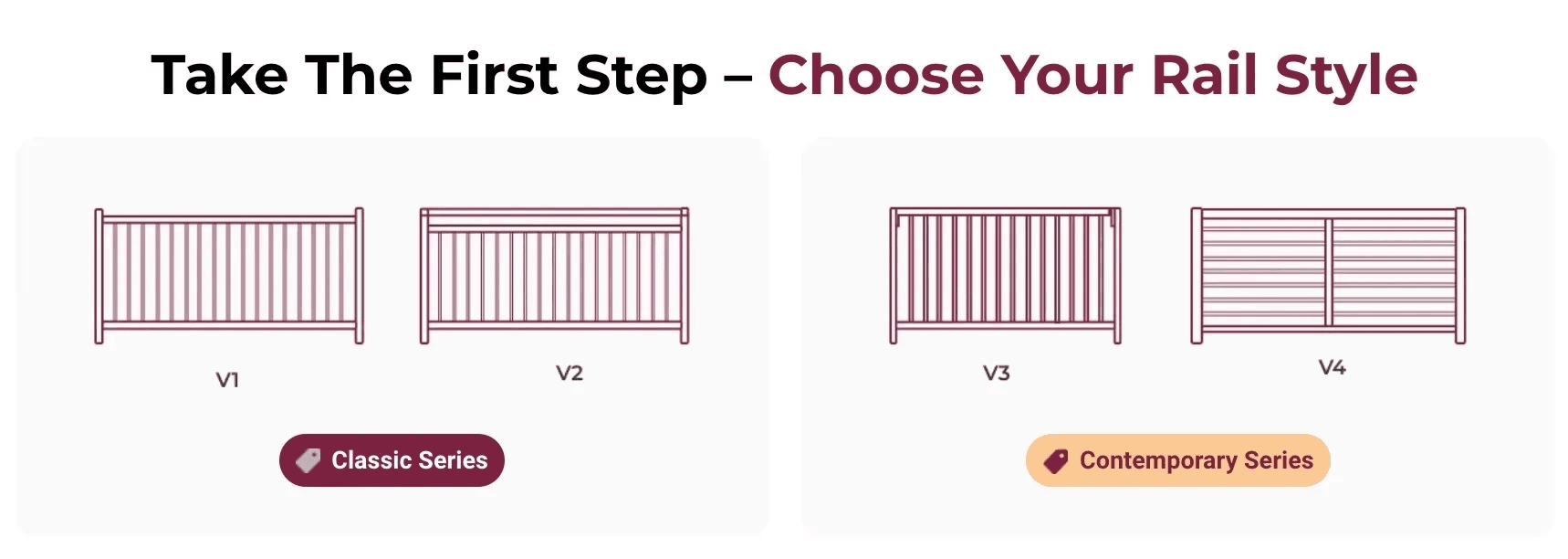
An example of structure and context – instead of multiple fragmented listings, products were grouped by style (Classic vs. Contemporary).